Wednesday, October 10, 2018
Resource Blog #4
This resource is a video of an actual lesson n a math class. The class read a book that related to geometry, and the teacher had them discuss and write answers to questions that revolve around how the characters in the book and their shape represent them. Not only did the video present this lesson, but at the bottom of the screen it informed you what strategy the teacher was using when prompted the students to do something. This is a great resource to see how literacy is applied in a real classroom.

Thursday, September 20, 2018
Resource Blog #3
The following resource is a piece of a text that illustrates 10 literacy-strategies throughout multiple content-area subjects; one being math. As you read through the text, it presents examples of different learning strategies that can be integrated in classes like graphic organizers, group discussion, verbalization of word problems and how to get through them, etc. As a future math teacher, I believe this resource would be beneficial to my teaching because it is already hard enough as it is to integrate literally into math courses, and this resource provides examples from every angle to incorporate positive growth in literacy in a math class.
Resource
103
Resource
103
Monday, September 17, 2018
Chapter 6: How to Use A Textbook
Who enjoys reading textbooks? Anyone? As a student, it is hard to find the motivation to read through a textbook. While reading through this chapter, a couple different strategies where mentioned that can be beneficial to reading a textbook. The strategy that stuck out the most to me was the jigsaw strategy. Jigsawing is a way to get every student involved with the reading without having to read every passage by themselves. When each student is assigned a certain portion of the reading, they are not only reading to broaden their own knowledge on the topic, but they are also reading to broaden other students understanding of the topic. Allowing the students to converse with others that read the same part of the text before breaking apart may bring about more ideas the students had not recognized initially which calls for a better presentation of the information when they split up into groups with students that did not read the same passage. To ensure the students are absorbing the information being given to them by other students, I will be sure to give them a worksheet where they have space to write down what they were learning, and the major points. After they have met with their groups, it might be beneficial to have a group member from each table share something they learned from another group member. This strategy may not be the best to be practiced in a math class, however, a science class would be practical for a strategy like jigsaw. Jigsaw might not only be a way to make reading a textbook fun, but it might also encourage students to actually get involved with the reading.

280
280
Tuesday, September 11, 2018
Strategy Lesson Response
This past Thursday I had the opportunity to do a lesson over the strategy Turn and Talk in the classroom with Jane Jang. Overall, I think we did a good job at teaching the lesson and getting the students involved, but we also had a couple slip ups as we taught the lesson. I believe we got the class to understand when and where to use the strategy and how to implement it in the classroom by getting them to explore when they would use it in their own classrooms. We also had them think about the pros and the cons about turn and talk because it is not always beneficial to the students. Although we had many positive outtakes, we also came across some issues with our lesson. We were not prompting the students to have an in-depth engagement with one another instead we were just telling them to talk about their answers.
Another slip up was that we did not reread our worksheet carefully before we presented it to the class, and the content had wording in it that could be taken as an inappropriate joke. As teachers, we will always have times where we mess up with materials in our classes, but we must be able to bounce back with a positive outlook. In this case we just had to laugh with the class then move on back to the lesson. This lesson has taught me not only what to look forward to in a classroom, but also how to recover from mistakes.
256
Monday, September 10, 2018
Journaling in Math Class
As math teachers, we must encourage and incorporate literacy in the classroom, and one good way to implement this in the classroom is to have the students keep a math journal. An abundance of people would question why would students in a math class need to have a journal, but this could be so beneficial to a student's learning in a classroom. By keeping a journal in math, students have the opportunity to reflect on what they learned in class and put it into their own words. The following link has more information about journaling in math class. It speak about the students having a chronological record of their learning experiences in math to refer back to. There are many different prompts and questions that students can write about. The given presentation would be beneficial for all future teachers to help apply literacy in a math classroom.
Journaling in Math Class
147
Monday, September 3, 2018
Chapter 11: Help for Struggling Readers
While reading through this chapter, I had to take a step back and realize that I needed to think more like a teacher because, as a student, I was able to relate to majority of the reading. I understand how it feels to not be successful in a classroom due to lack of self-confidence and being worried about failure. The big out take for me was what can I do as a teacher to reach students like me and ensure that they are given an equal opportunity in the classroom where they are comfortable with themselves and their abilities. In the text, they speak about the steps that Jennifer Hernandez take to make supportive connections with students. All of the steps are important to connect with students, but some are crucial to their learning. One of the mains steps that stuck out to me the most was "pointing out individual students' strengths". The first thing that that will do in a classroom is build confidence. Once a student's ability is approved of by a teacher, they will be able to model their ability more often in the classroom because they know they do it well. Whereas those who are not confident in themselves seem to hide behind their books.
Another big steps she takes is to share her own struggles with the students when dealing with difficult text. Students do not like to feel alone in their struggles. Once they have a sense that they are not the only ones that are having a hard time with the text, they are more likely to seek assistance. If you share your struggles as a teacher, I believe your students will be more comfortable with the idea of not fully grasping the concept at hand and turn to you for help. All in all, there are many steps you can take to help students who struggle with reading in your classroom, but you must take that first step to reaching the students to see their success.
330
Monday, August 27, 2018
Frayer Model in a Math Class
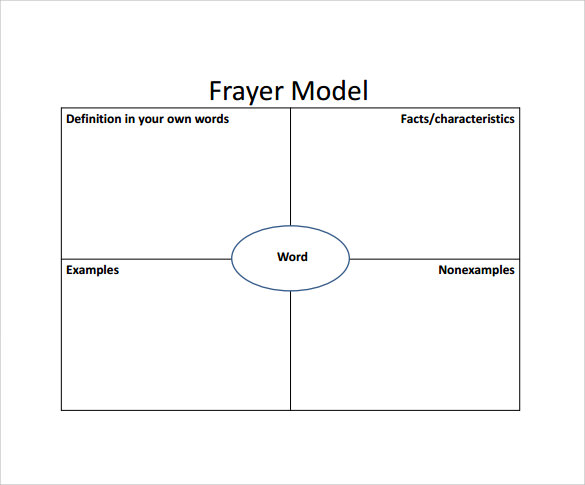
This is a Frayer Model which is used in a classroom to help students go beyond the surface of just a word. This graphic organizer can be beneficial in a math class because it helps students organize meanings and concepts of math vocabulary. Students are most likely not gaining much knowledge from a list of vocabulary words followed by a definition. This chart allows a student to dive deeper into the value of the word. The Frayer Model is divided into four section; definition, facts/characteristics, examples, and non examples. Now, with the information in the graphic organizer, students not only understand the meaning of the word, but they know what it looks and what it does not look like in a given problem.
123
123
Subscribe to:
Posts (Atom)